

Negotiations between the United States and Iran advanced Tuesday toward what Tehran described as the beginning of a potential framework, but sharp public divisions between the two sides underscored how far apart they remain.
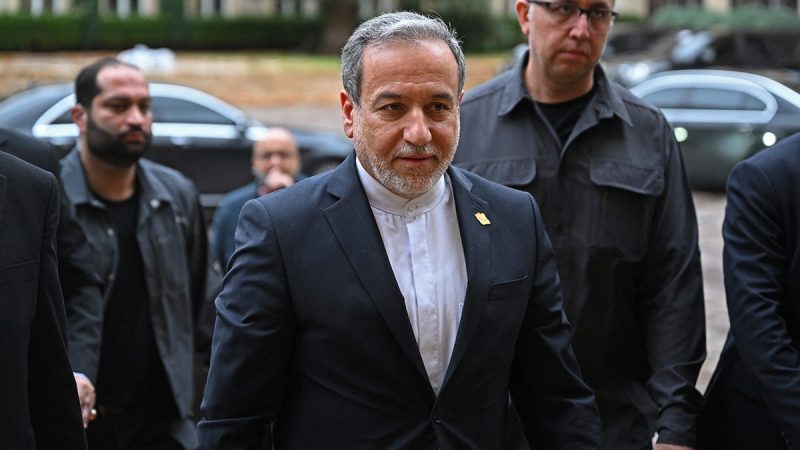
Iranian Foreign Minister Abbas Araghchi said the two sides reached a ‘general agreement on a number of guiding principles’ and agreed to begin drafting text for a possible agreement, with plans to exchange drafts and schedule a third round of talks.
‘Good progress was made compared to the previous meeting,’ he said, adding that while drafting would slow the process, ‘at least the path has started.’
Yet Washington publicly has insisted that any agreement must result in the dismantling of Iran’s nuclear program — including its enrichment capacity — along with limits on Tehran’s ballistic missile program and an end to its support for allied militant groups such as Hamas and Hezbollah. Those demands go well beyond temporary enrichment pauses or technical adjustments.
Iran Supreme Leader Ali Khamenei appeared to push back directly against that premise, signaling a firm ceiling on Iran’s concessions.
‘The Americans say, ‘Let’s negotiate over your nuclear energy, and the result of the negotiation is supposed to be that you do not have this energy!’’ he wrote on social media as talks were underway. ‘If that’s the case, there is no room for negotiation.’
Khamenei’s remarks suggest that while Iranian negotiators may be discussing limits or interim measures, Iran is unlikely to accept an agreement that eliminates its nuclear program outright — setting up a direct collision with the Trump administration’s insistence on dismantlement.
‘Progress was made, but there are still a lot of details to discuss,’ according to a U.S. official. ‘The Iranians said they would come back in the next two weeks with detailed proposals to address some of the open gaps in our positions.’
President Donald Trump said Monday he would be watching the talks closely.
The mistrust runs deep.
Iranian officials have pointed to U.S. military strikes on their nuclear facilities in June 2025 as part of the broader backdrop complicating diplomacy, arguing such actions demonstrate Washington’s willingness to use force even as negotiations unfold.
Behind the diplomatic push, the United States has significantly expanded its military footprint in the region. The USS Abraham Lincoln is operating in the Arabian Sea, and F-35 fighter jets from the carrier shot down an Iranian Shahed-139 drone recently after it approached the strike group — a move U.S. officials described as demonstrating low tolerance for provocations.
The USS Gerald R. Ford, the Navy’s newest aircraft carrier, is now transiting toward the Middle East. President Trump confirmed the deployment on Feb. 13, saying, ‘In case we don’t make a deal, we’ll need it.’ Reports indicate a third carrier, the USS George H.W. Bush, is being prepared for possible expedited deployment, which would create a rare three-carrier U.S. presence near Iranian waters.
The buildup extends beyond naval forces. A squadron of F-35A Lightning II aircraft landed at RAF Lakenheath in the United Kingdom earlier in February as a staging point for potential deployment to the Middle East, while satellite imagery shows additional U.S. aircraft — including F-15E Strike Eagles and A-10 Thunderbolts — positioned at Muwaffaq Salti Air Base in Jordan.
Logistics flights into the region have also surged.
More than 100 C-17 cargo aircraft have arrived since late January, transporting advanced air defense systems, including Patriot and THAAD batteries, to bases in Qatar and Saudi Arabia, according to defense tracking data.
At the same time, Iran’s leadership has paired diplomatic engagement with forceful warnings.
Khamenei said the United States could be ‘struck so hard that it cannot get up again,’ and a senior commander in Iran’s Islamic Revolutionary Guard Corps Navy declared the country is prepared to close the Strait of Hormuz if ordered — a move that could disrupt roughly one-fifth of global oil flows through the strategic waterway.
Despite the heightened rhetoric and military signaling, Iranian officials said talks would continue, framing the Geneva discussions as a step toward a possible agreement — even as the fundamental dispute over dismantlement versus preservation of Iran’s nuclear capabilities remains unresolved.
Fox News’ Nick Kalman contributed to this report.